What is septic tank backup cleanup? A septic backup can create a concentrated wastewater event inside or around a property. The cleanup plan should consider both the immediate contaminated area and the underlying septic issue, which may require a qualified septic professional.
How septic tank backup cleanup is approached
A septic backup can create a concentrated wastewater event inside or around a property. The cleanup plan should consider both the immediate contaminated area and the underlying septic issue, which may require a qualified septic professional.
A septic backup means the onsite system can't keep up: the tank is full, the drain field is saturated or failing, the effluent pump quit, or a line is blocked. Inside, that shows up as sewage in the lowest drains first — tubs, showers, floor drains — often with gurgling in other fixtures. Cleanup handles the contamination indoors, but nothing is truly resolved until a septic contractor finds why the system backed up. Pumping the tank without diagnosing the drain field just buys time.
Conditions that determine the cleanup scope
The scope is driven by the septic failure's cause, how the wastewater entered and spread, which indoor materials and outdoor areas were contacted — including soil — and whether the system issue is resolved. Until the septic problem itself is diagnosed, any cleanup scope is provisional, because the contamination could return.
Typical cleanup sequence
Assess the source and contamination path
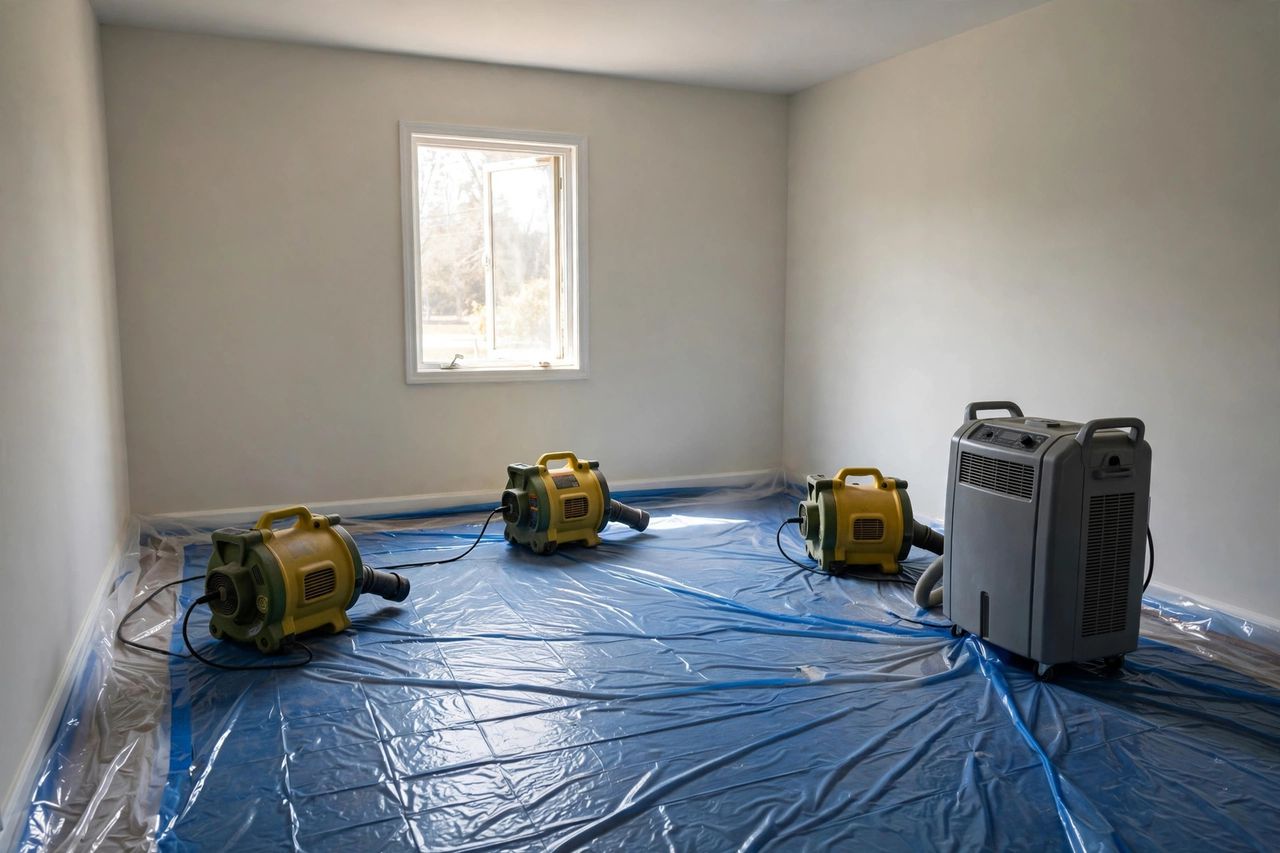
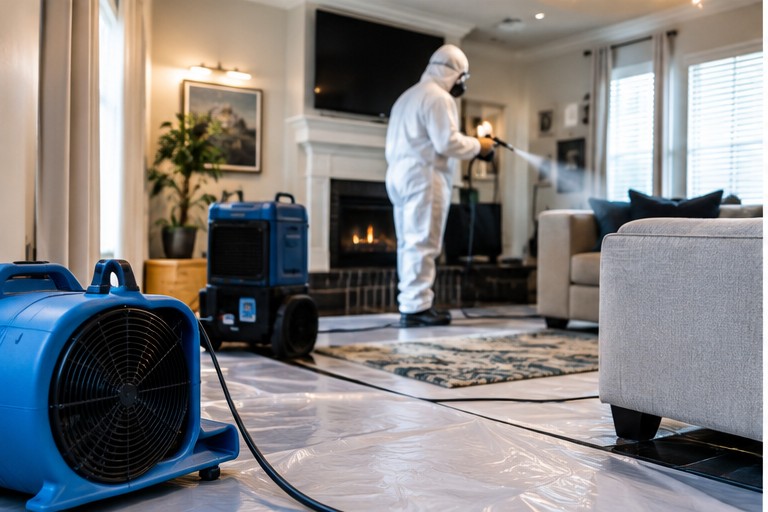
Control the affected area and reduce unnecessary exposure
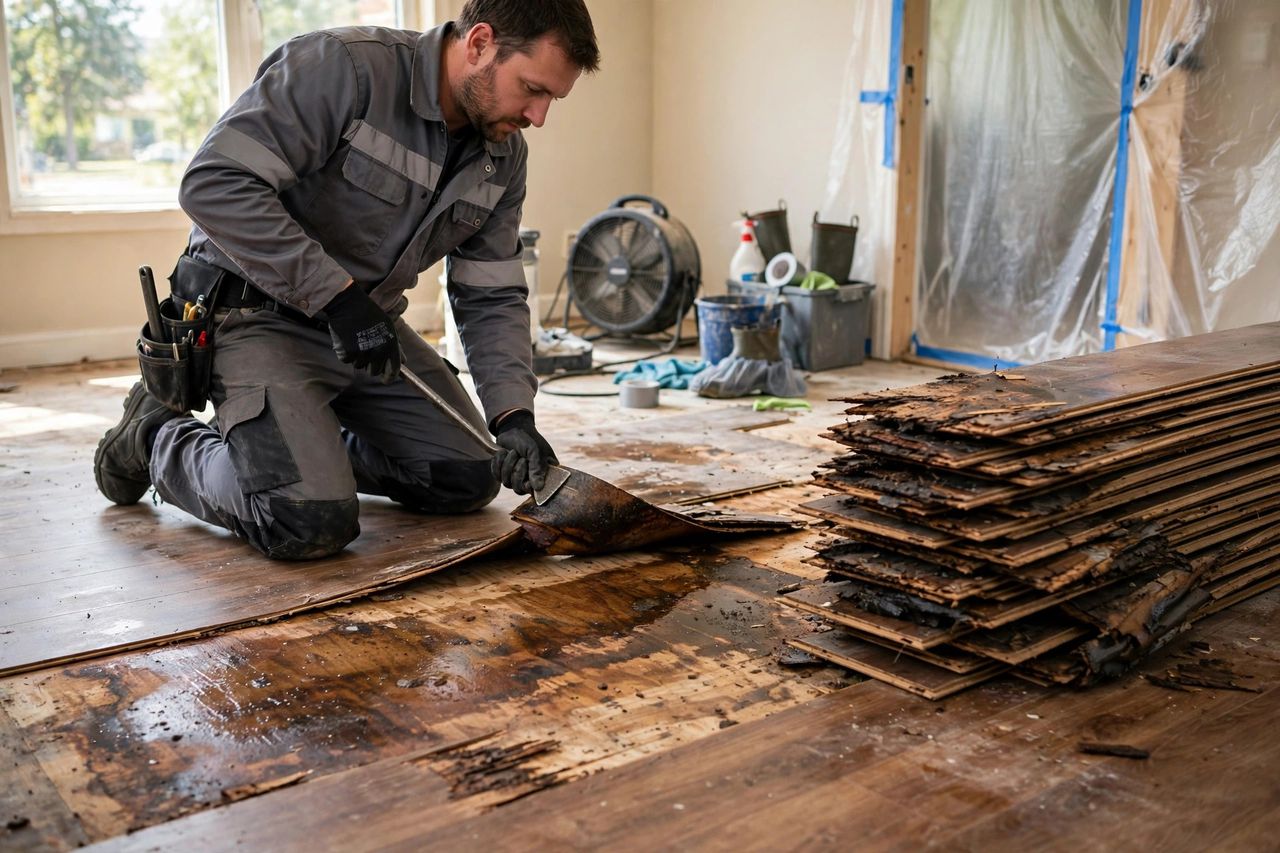
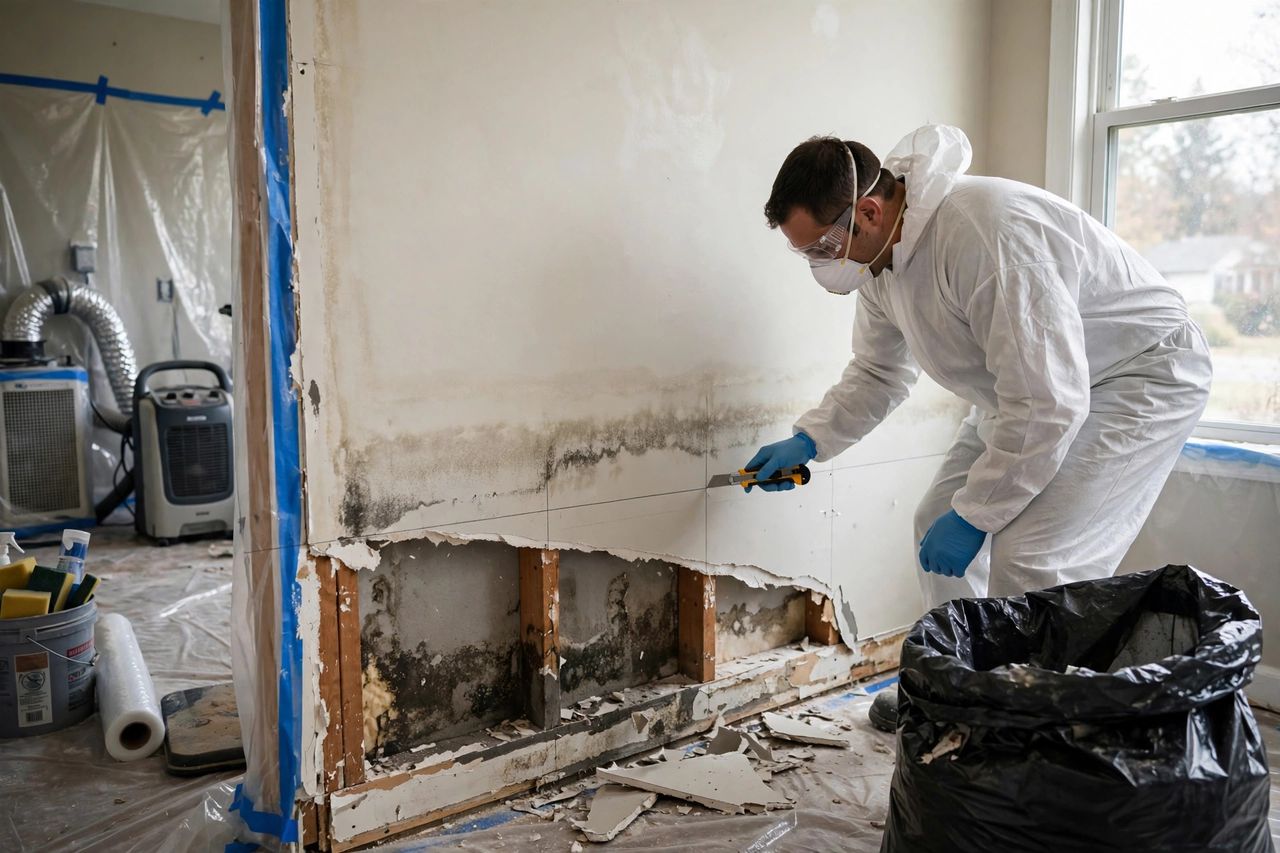
Remove wastewater and contaminated materials where appropriate
Physically clean affected surfaces and contents that can be retained
Dry and monitor affected areas for remaining moisture
Address odor, microbial growth, repairs, and restoration needs
Materials that may be affected
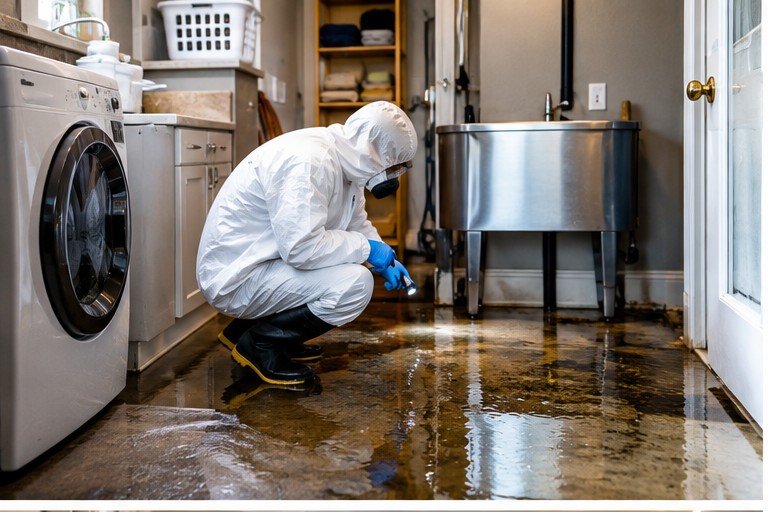
Septic backups hit low fixtures and the rooms around them: shower and tub bases, bathroom floors, laundry room floors, and any finished space near floor drains. Because septic effluent is concentrated, porous materials in contact with it — carpet pad, drywall bottoms, stored items — are typically removed rather than cleaned. The tank and drain field themselves are the septic contractor's territory, not the cleanup crew's.
What to do before cleanup
- Keep everyone clear of standing wastewater until the area is sanitized.
- Never combine bleach with other household cleaners; household chemistry cannot make sewage safe.
- Avoid circulating air through the affected area; professionals use containment and HEPA-filtered air instead.
- Document the affected areas with photos before cleanup alters the scene.
- Check if wastewater is still entering the home— coordinate the fix with the cleanup, not after it.
What not to assume
For Septic Tank Backup Cleanup in Schertz, appearance is a poor judge: sewage can leave biological contamination on materials that look perfectly dry. Drywall, carpet pad, and insulation that contacted sewage usually come out; tile, concrete, and sealed surfaces can usually be restored.
Schertz context
Plenty of Schertz-area properties on larger lots run private septic systems rather than city sewer — and many owners don't know their tank's pumping history. Heavy Texas rains can saturate a drain field and trigger backups in an otherwise working system. The City of Schertz's wastewater resources focus on the sewered areas; septic owners deal directly with licensed septic contractors.
Questions people ask about septic tank backup cleanup
What is septic tank backup cleanup?
Septic tank backup cleanup addresses a concentrated wastewater event caused by a septic system problem — wastewater backing up into the property or surfacing around it. The cleanup plan has to consider both the immediate contaminated area and the underlying septic issue, which may require a qualified septic professional. The exact scope depends on the source, the spread, the materials contacted, and moisture conditions.
When is septic tank backup cleanup needed?
It is needed when a septic system failure pushes wastewater into the building or onto the property — through drains, toilets, or low fixtures, or as surfacing effluent outside. Because septic backups often recur until the system issue is fixed, cleanup and septic diagnosis should be coordinated rather than treated as separate, sequential jobs.
Can the visible water be the whole problem?
Rarely. Septic wastewater is concentrated, and it travels the same hidden paths as any wastewater — under flooring, behind baseboards, into porous materials — while also potentially affecting soil and exterior areas. The visible backup point is just where the system failure surfaced.
What should happen before deodorizing?
Confirm the septic issue is being addressed, remove the wastewater and contaminated materials, clean residues, and manage moisture first. Deodorizing while the system problem persists is futile — the odor source is the ongoing septic failure and the contamination it leaves, so odor work follows source control.
What if the backup appears to be a public sewer problem?
Septic systems are private infrastructure, so the diagnosis usually falls to a qualified septic professional rather than a municipal utility — but if the property is near a public line or the source is unclear, the appropriate authority can help clarify. The City of Schertz identifies CCMA as the regional wastewater provider serving Schertz and nearby communities.